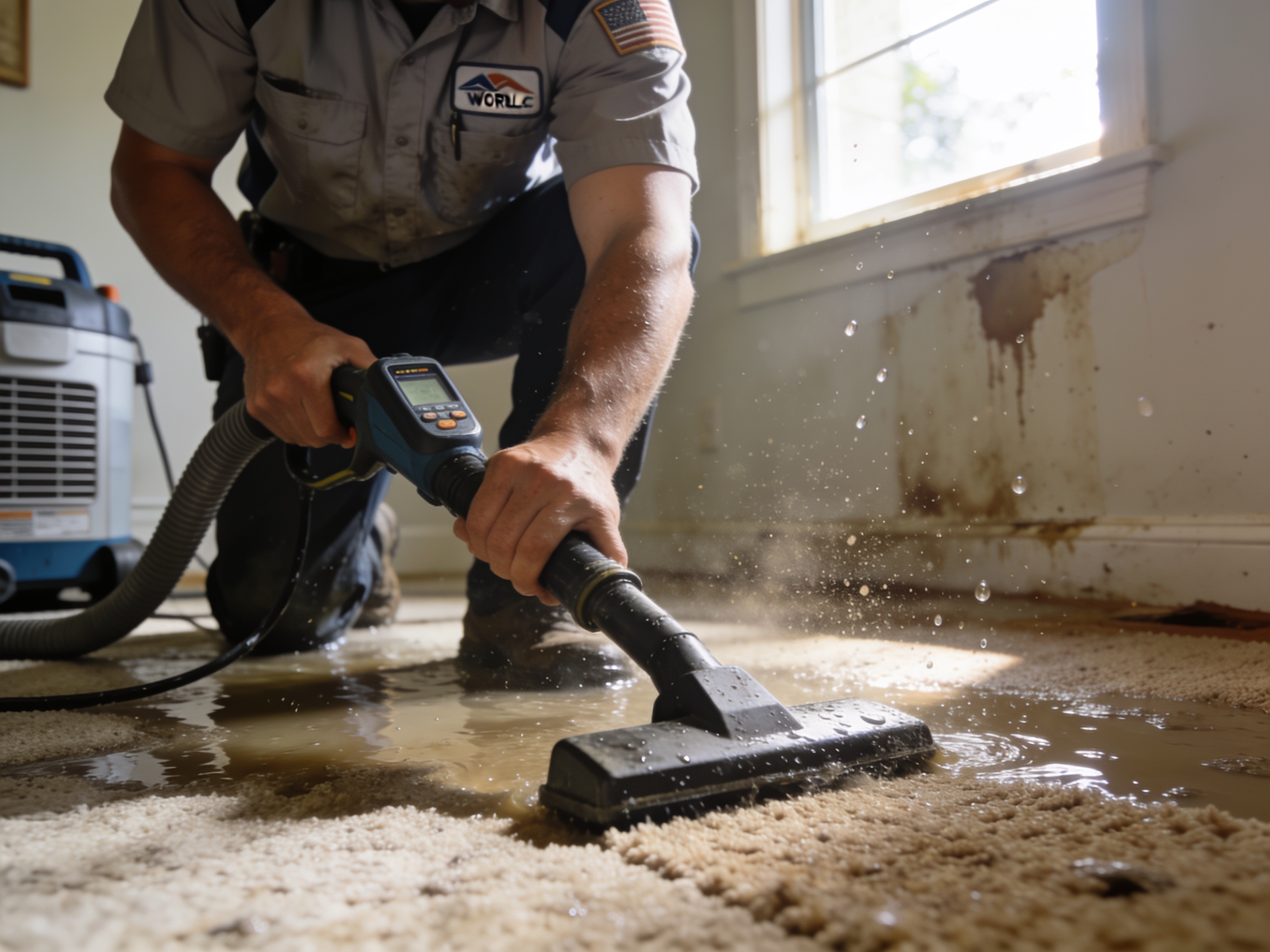
Fort Worth's humid subtropical climate keeps indoor moisture levels high after any water event, especially during hot summers when humidity spikes above 70 percent. Older homes in Arlington Heights and Downtown often feature plaster walls and pier-and-beam foundations that trap water longer than newer slab construction, requiring targeted moisture mapping with meters rather than visual checks alone. Tarrant County properties near the Trinity River or in low-lying Stockyards blocks see faster groundwater intrusion during heavy rains.
Technicians working 24/7 Water Damage Restoration must account for TCU-area student housing with shared plumbing lines that can spread leaks across multiple units quickly. Materials like original hardwood floors in Cultural District bungalows cup or buckle within 48 hours if not dried below 12 percent moisture content. Nearby cities such as Arlington and Keller share similar clay soils that expand and contract, shifting foundations and creating repeat entry points for water.
Edge cases include sewage backups from aging municipal lines in Mansfield-adjacent neighborhoods, where cross-contamination risks demand full containment and HEPA air scrubbing before any drying begins. Code requirements in Fort Worth call for permits on structural drying that affects load-bearing walls, something crews verify before removing saturated insulation in attic spaces common to ranch-style homes.
Upfront inspection at the 9800 Hillwood Pkwy location allows crews to pull the right equipment for the job instead of guessing on site, reducing callbacks when summer storms hit back-to-back.
Technician insight
In Fort Worth, the thing that catches most people out with 24/7 Water Damage Restoration is how quickly humidity in the 70-plus percent range during summer re-wets plaster and subfloors in 1940s Arlington Heights homes if you pull equipment too early. Clay soils around TCU and the Stockyards keep pushing moisture back through foundations for days after the initial event, so we always run a second moisture check 48 hours after shutdown.
Crawlspace Flood Near TCU Stadium
Heavy rain sent water under a 1960s pier-and-beam home two blocks from TCU Stadium. We found saturated insulation and mold starting on floor joists from repeated Trinity River backups. Extraction and targeted drying over five days brought moisture levels down without removing original hardwood, preventing further cupping.
24/7 Water Damage Restoration Services We Offer
✓Emergency Water Extraction
Rapid removal of standing water from Fort Worth homes using truck-mounted pumps before mold sets in during humid summer nights.
✓Structural Drying for Older Homes
Targeted drying of plaster and pier-and-beam structures common in Arlington Heights and Downtown using air movers and dehumidifiers sized for Tarrant County humidity.
✓Sewage Backup Restoration
Full containment and sanitization after municipal line failures near the Stockyards or TCU Stadium where older pipes frequently back up.
✓Post-Storm Water Intrusion Repair
Roof and window leak drying for Cultural District properties after sudden downpours that overwhelm gutters on 1950s-1970s construction.
✓Basement and Crawlspace Drying
Moisture removal from below-grade spaces in Keller and Mansfield border homes where clay soil expansion pushes water through foundation walls.
24/7 Water Damage Restoration Cost in Fort Worth, TX
| Service | Typical Range | What Affects It |
|---|---|---|
| Category 1 Clean Water Extraction | $450–$900 | Moves with volume and access in single-story vs multi-level homes |
| Category 2 Gray Water Drying | $800–$1,800 | Higher when plaster walls or hardwood floors in Arlington Heights homes are involved |
| Category 3 Black Water Restoration | $1,500–$3,500 | Includes containment and disposal; price rises with sewage line location near older Stockyards properties |
| Equipment Rental Per Day | $150–$350 | Depends on number of air movers and dehumidifiers needed for humidity control |
Ranges are typical for Fort Worth, TX and confirmed with an exact written quote before any work starts.
How it works
- 1
Immediate Assessment
Crew arrives within hours, maps moisture with meters, and identifies affected materials in the specific Fort Worth neighborhood.
- 2
Water Removal
Extraction of standing water using pumps and vacuums sized for the volume found in pier-and-beam or slab homes.
- 3
Drying And Dehumidification
Placement of equipment calibrated to local humidity levels, with daily monitoring until readings drop below target thresholds.
- 4
Sanitization And Final Check
Application of antimicrobials where needed, followed by final moisture verification before any reconstruction begins.
Pricing
Upfront quotes after inspection; cost varies by water category, affected square footage, and drying duration required.