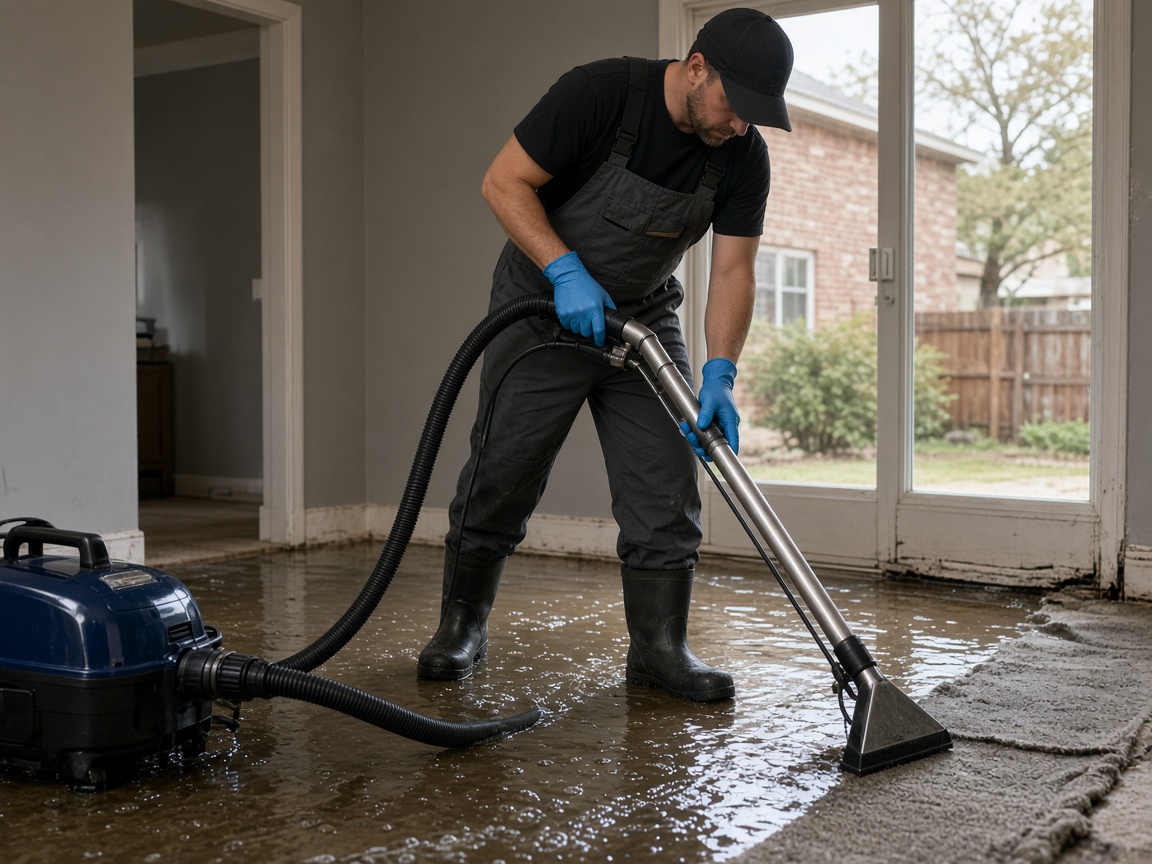
Fort Worth's humid subtropical climate brings sudden summer storms and occasional winter freezes that stress older plumbing in neighborhoods like Arlington Heights and the Stockyards. Homes built before the 1970s often have galvanized lines that corrode and fail without warning, sending water into crawl spaces or slab foundations where it spreads quickly under the clay-heavy Tarrant County soil. Technicians must map moisture migration beyond visible wet areas because hidden pockets behind plaster walls or under TCU-area bungalows can trigger mold within 48 hours if not addressed.
Sundance Square commercial buildings and Cultural District properties frequently involve mixed materials such as brick, terrazzo, and lath-and-plaster that require different drying protocols than modern drywall. After extraction, industrial air movers and dehumidifiers run continuously while monitoring with moisture meters to bring readings below 15 percent. Crews also coordinate with local code requirements when water reaches electrical panels or HVAC systems common in these historic structures.
Service extends to nearby Arlington, Mansfield, and Keller where newer subdivisions sit on flatter terrain that drains poorly during heavy rains, increasing basement and garage flood risk. Every job starts with infrared imaging to locate trapped moisture behind cabinets or under flooring before any demolition begins.
Technicians document all affected materials for insurance adjusters and provide daily moisture logs so homeowners in Downtown lofts or Stockyards warehouses know exactly when their property is dry enough for repairs.
Technician insight
In Fort Worth the thing that catches most people out with Emergency Water Damage Restoration is how fast humidity turns a small slab leak in an Arlington Heights 1950s home into widespread mold under the flooring because the clay soil holds moisture against the foundation for weeks.
Downtown Loft Pipe Failure
A galvanized supply line burst on the second floor of a converted Downtown warehouse. Water traveled under hardwood into the unit below. Extraction and targeted drying behind brick walls prevented mold growth and allowed the owner to reopen the space within five days.
Emergency Water Damage Restoration Services We Offer
✓Burst Pipe Water Extraction
Immediate removal of standing water from galvanized or copper line failures common in pre-1970 Fort Worth homes, followed by targeted drying to prevent slab migration.
✓Storm Flood Cleanup
Rapid pumping and debris removal after Tarrant County thunderstorms, including sediment cleanup from Stockyards and Cultural District properties where drainage is limited.
✓Sewage Backup Remediation
Safe extraction and disinfection of contaminated water from older sewer lines affecting Arlington Heights and TCU neighborhoods, with full containment and disposal.
✓Slab Leak Drying
Moisture mapping and drying under concrete foundations typical in Mansfield and Keller homes where shifting clay soil cracks supply lines.
✓Commercial Water Damage Recovery
Large-scale extraction and equipment drying for Sundance Square offices and Kimbell Art Museum-adjacent buildings with mixed historic materials.
Emergency Water Damage Restoration Cost in Fort Worth, TX
| Service | Typical Range | What Affects It |
|---|---|---|
| Initial Emergency Assessment | $150–$350 | Waived if full restoration proceeds; higher for commercial or after-hours calls |
| Water Extraction | $500–$2,200 | Varies by gallons removed and access difficulty in older Fort Worth homes |
| Drying Equipment Rental | $400–$1,800 | Daily rate based on number of rooms and duration needed |
| Sewage Contamination Cleanup | $1,200–$3,500 | Includes disposal and antimicrobial treatment; higher for multi-story properties |
Ranges are typical for Fort Worth, TX and confirmed with an exact written quote before any work starts.
How it works
- 1
On-Site Assessment
Technician arrives within hours, uses moisture meters and infrared cameras to document all wet materials in the affected Fort Worth property.
- 2
Water Extraction
Industrial pumps and vacuums remove standing water from floors, carpets, and wall cavities before secondary damage sets in.
- 3
Drying and Dehumidification
Air movers and dehumidifiers run continuously while daily readings track progress until moisture levels return to normal.
- 4
Final Inspection and Documentation
Complete moisture log and photos provided for insurance, confirming the structure is dry and ready for restoration.
Pricing
Upfront written quotes after inspection; final cost depends on water volume, affected square footage, and materials involved.