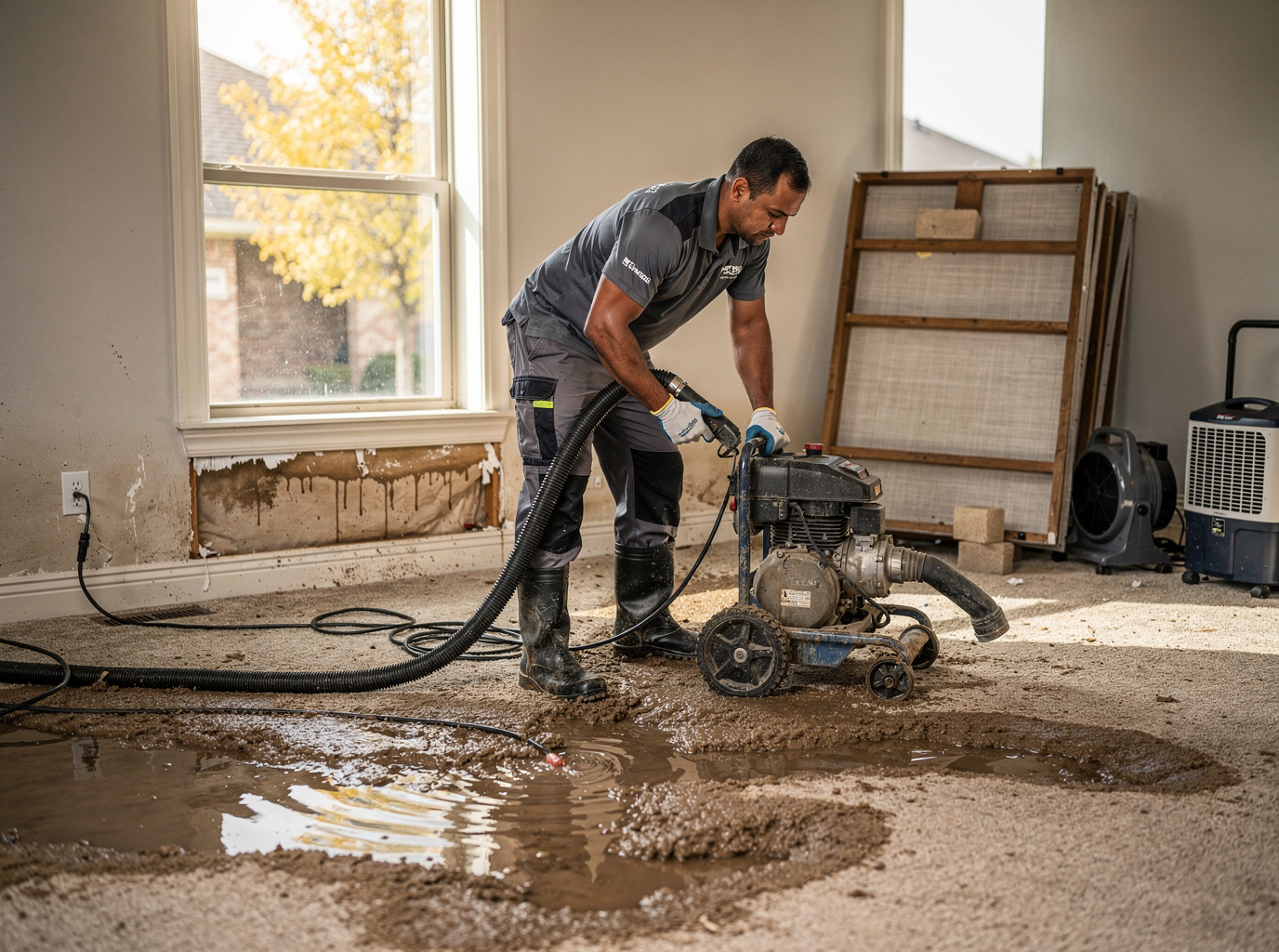
Trophy Club homes sit on clay-heavy Tarrant County soil near several lakes, so groundwater seepage after heavy rain often reaches crawl spaces and slabs faster than in drier parts of Fort Worth. Our crew leaves the 76177 shop by 8 a.m. on weekdays and reaches Trophy Club Drive addresses before lunch, bringing portable extractors sized for the open floor plans common in 1990s subdivisions here.
Mild winters keep pipes from freezing, but the long humid season turns small roof leaks into attic mold inside the vaulted ceilings found along Lakes of Trophy Club. We schedule Saturday calls until 2 p.m. so residents on the golf-course side can get moisture readings and containment set before Monday work traffic starts.
Access through the main gates is straightforward, yet narrow cul-de-sacs around the park require shorter hoses and smaller drying fans than the wider streets in neighboring Keller.
Around 27. Trophy Club
We regularly work near:
- 📍Trophy Club Park
- 📍The Golf Club at Trophy Club
- 📍Lakes of Trophy Club
- 📍Carroll Senior High School
Water Damage Repair in 27. Trophy Club — Local Notes
- •Clay soil in Trophy Club expands and contracts with lake-level changes, opening foundation cracks that let water under slabs during spring rains.
- •Many homes built 1988-2005 have limited crawl-space access, so we use smaller dehumidifiers to avoid disturbing finished basements that are rare but present near the golf course.
- •Proximity to the lakes increases humidity load in attics, requiring longer drying times than inland Fort Worth neighborhoods even in mild winters.