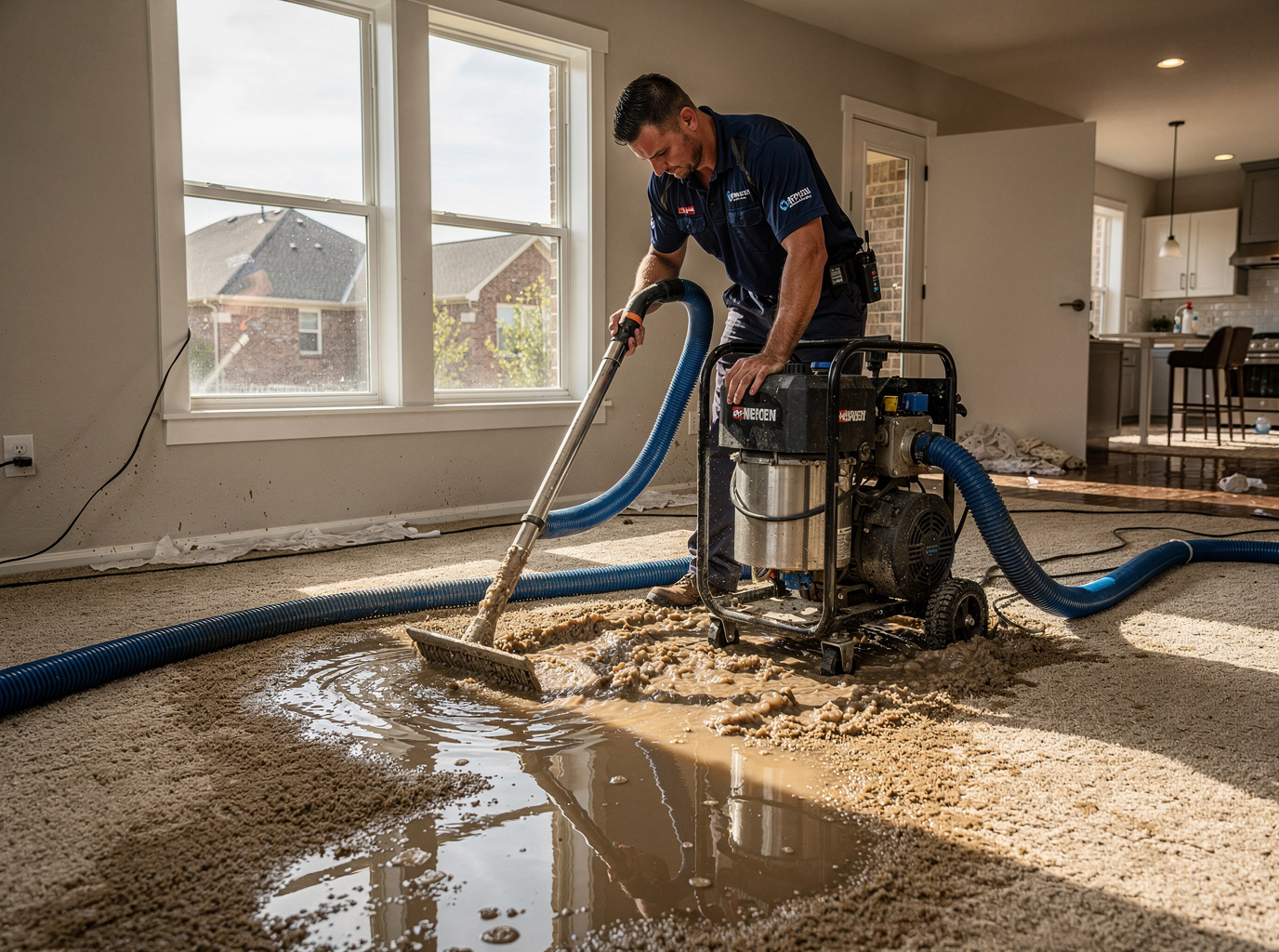
In Fort Worth's humid subtropical climate, standing water left after appliance failures or heavy rain quickly leads to mold within 24-48 hours, especially in older slab-on-grade homes common in Arlington Heights and the Cultural District. Extraction crews must account for the area's clay-heavy soils that hold moisture against foundations, forcing technicians to pull water from under baseboards and behind cabinets before it migrates into TCU-area bungalows built in the 1940s. Portable extractors rated for 200+ gallons per minute are standard because gravity drainage is limited on the flat Tarrant County terrain.
Stockyards commercial buildings and Sundance Square retail spaces often feature mixed masonry and wood framing that traps water in wall cavities, requiring targeted extraction wands rather than simple floor sweeps. Nearby cities like Arlington and Mansfield see similar issues from flash flooding along creeks, where crews frequently encounter contaminated Category 3 water that demands full PPE and disposal protocols. Homeowners in Keller frequently overlook moisture under luxury vinyl plank flooring, which can delaminate if not extracted within the first day.
Technicians routinely inspect for hidden pockets around TCU Stadium event parking lots where poor grading directs runoff into attached garages. The work differs from simple mopping because Fort Worth's mild winters still allow slow evaporation that feeds hidden growth behind drywall in Downtown lofts converted from warehouses.
Technician insight
In Fort Worth, the thing that catches most people out with water extraction is older slab homes in Arlington Heights and the Cultural District where water travels under the concrete edge and resurfaces days later in interior rooms. The clay soils hold moisture against the foundation far longer than people expect, so skipping perimeter checks almost always leads to hidden mold later.
Flash Flood Extraction in a Stockyards Loft
Heavy rain sent creek water into a converted warehouse loft near the Fort Worth Stockyards. Extraction crews found water trapped under the original wood subfloor and behind brick veneer. They used wand extractors along the perimeter and removed saturated insulation before mold could set in the humid air.
Water Extraction Services Services We Offer
✓Emergency Standing Water Removal
Rapid deployment of truck-mounted extractors to clear inches of water from homes in the Stockyards and Downtown before it reaches electrical systems or spreads to neighboring units.
✓Carpet and Pad Extraction
Lift and extract water from saturated carpet and padding in Arlington Heights residences, preventing delamination and reducing drying time in the region's humid air.
✓Basement and Crawlspace Extraction
Targeted pumping and wand work for water that collects under older TCU-area homes where shallow foundations meet Tarrant County's expansive clay soils.
✓Appliance Leak Extraction
Focused removal of water from washing machine or water heater failures common in Cultural District bungalows, followed by moisture mapping to catch hidden migration.
✓Storm and Flash Flood Extraction
Post-rain extraction for properties near Mansfield and Keller where creek overflow enters garages and first floors, including removal of silt-laden water.
Water Extraction Services Cost in Fort Worth, TX
| Service | Typical Range | What Affects It |
|---|---|---|
| Standard room extraction (under 500 sq ft) | $250–$550 | Higher when Category 3 water or multiple rooms are involved |
| Crawlspace or basement extraction | $400–$900 | Increases with depth and silt load from Tarrant County soils |
| Carpet and pad removal plus extraction | $150–$350 | Depends on square footage and disposal fees |
| After-hours or weekend response | $150–$300 | Added to base extraction during Sat 9am–2pm or outside Mon–Fri 8am–6pm |
Ranges are typical for Fort Worth, TX and confirmed with an exact written quote before any work starts.
How it works
- 1
Initial Assessment
Technicians arrive at the Fort Worth address, identify water source and category, then map affected zones in neighborhoods like the Stockyards or Arlington Heights.
- 2
Containment Setup
Barriers and negative air are placed to limit spread, especially important in attached Downtown buildings or multi-unit properties near Sundance Square.
- 3
Mechanical Extraction
Truck-mounted and portable units pull standing water from floors, carpets, and wall cavities while crews monitor for hidden pockets behind baseboards.
- 4
Moisture Verification
Infrared and pin meters confirm dryness levels before equipment is removed, accounting for Fort Worth's slow winter evaporation rates.
Pricing
Costs depend on water volume, access difficulty, and whether carpet or structural cavities are involved; quotes are provided after inspection.